Thursday, March 29, 2007

In the News: The Facts about Soy Protein and Heart Health

Newswise (03/29/07) — Recent controversy has surfaced regarding the efficacy of soy protein consumption in reducing serum cholesterol. Of primary concern is whether a 1995 meta-analysis (which generated considerable excitement in the medical community) accurately estimated the impact of soy consumption on cholesterol lowering. Following are the facts you should know about soy and heart health.

FACT: Experts agree soy protein lowers cholesterol
A 2006 American Heart Association (AHA) research review found that soy protein lowers blood cholesterol above and beyond that realized from a low fat, low cholesterol diet. This finding is consistent with the U.S. Food and Drug Administration (FDA) recognizing that soy protein lowers cholesterol by between 3 and 8 percent.

FACT: Experts agree soy has additional heart health benefits
The AHA report noted that soy foods are heart healthy because of their high content of polyunsaturated fats, fiber, vitamins, minerals and low content of saturated fat, making them an ideal substitute for less healthy foods that are high in saturated fat and cholesterol. The FDA and, similarly, the AHA have agreed that soy foods appear to modestly lower triglycerides and raise HDL (“Good”) blood cholesterol levels.

FACT: Eight governments recognize the heart health benefits of soy
Authorities around the world have approved health claims supporting the consumption of soy protein and a lowering of blood cholesterol, including the USA, Korea, Japan, Brazil, Philippines, Indonesia, Malaysia and the United Kingdom. These claims were approved based on an extensive review of scientific literature to determine that the relationship between soy protein and lowered cholesterol was well established. It’s the weight of this scientific evidence that led so many government health authorities to approve soy/heart health claims.

FACT: Soy protein is a food, not a prescription drug
Soy foods have the unique ability to both lower LDL (“Bad”) cholesterol and lower triglycerides, but not to the degree expected from cholesterol-lowering medications. That soy products have been found to lower blood cholesterol even a small amount, however, has the potential to dramatically impact public health. One may argue whether a 3 – 8 percent reduction in cholesterol is “clinically significant,” but the bottom line is that heart disease prevention depends on small life changes. Neither pharmaceuticals nor soy foods are by themselves panaceas for a healthy heart.

Wednesday, March 28, 2007

In the News: Black Raspberries May Slow Growth of Colon, Other Cancers

NEWSWISE (03/28/07) -- For several years, our laboratories have studied the ability of freeze-dried berries (black raspberries, strawberries and blackberries) to inhibit cancer in the esophagus, colon and oral cavity. Berries contain a number of agents that prevent cancer including vitamins A, C, and E; calcium and selenium; ß-carotene, α-carotene and lutein; and many phenolic compounds which have high anti-oxidant potential. The most abundant phenols are the anthocyanins which give berries their color. In general, dark berries have higher contents of anthocyanins and anti-oxidant potential than light berries. The addition of powdered berries at 5 and 10% of the diet of animals reduces their risk for development of cancer in the oral cavity, esophagus and colon by 45-80%.

Berries function to reduce the amount of genetic (DNA) damage produced in these tissues by chemical carcinogens, including carcinogens in tobacco smoke and in the diet. They also reduce the growth rate of precancerous cells, in part, by reducing the expression of genes associated with cell growth. Berries also inhibit the expression of other genes associated with cancer development including genes involved in inflammatory processes and in the formation of new blood vessels (angiogenesis).


In a preliminary trial in humans, berries were found to be well tolerated at doses similar to those used in animals. They reduced cellular damage caused by oxidative radicals which is consistent with their anti-oxidant potential. In view of these results, several human clinical trials are ongoing to determine the ability of freeze-dried berries to inhibit the development of precancerous lesions in the oral cavity, esophagus and colon of humans. Preliminary results suggest that berries influence the expression of many of the same genes in humans as they do in animals. An apparent advantage of this “food-based” approach to disease prevention is the relative absence of toxicity associated with the long-term consumption of berries by humans.

Tuesday, March 27, 2007

In the News: Pomegranate Juice May be Good for the Prostate and Heart

Few American men have heard of the pomegranate, and fewer still have eaten this curious-looking fruit loaded with red seeds. But new scientific findings suggest that pomegranates may one day find a place in healthful diets, reports the April 2007 issue of Harvard Men’s Health Watch.

Two recent studies suggest that pomegranate juice may help fight prostate cancer. In one study, scientists grew cells from highly aggressive cases of human prostate cancer in tissue cultures. Pomegranate fruit extracts slowed the growth of the cultured cancer cells and promoted cell death. The researchers then implanted the cancer cells in mice. A group of mice that received water laced with pomegranate juice developed significantly smaller tumors than the untreated animals. In a preliminary study of men with prostate cancer, pomegranate juice lengthened patients’ PSA doubling time (the longer the doubling time, the slower the tumor is growing) from 15 months before treatment to 54 months on the juice.

Preliminary results in test tubes, animals, and humans suggest that pomegranates may also have beneficial effects on cardiovascular disease. Studies show that pomegranate juice can protect LDL (bad) cholesterol from oxidative damage. The juice has also been shown to slow the progression of plaques in mice with atherosclerosis. Results from two small clinical studies are even more intriguing, showing that carotid artery thickness decreased and cardiac blood flow improved in pomegranate juice drinkers. However, preliminary research also suggests that pomegranate juice may interact with certain medications, much like grapefruit juice does.

The bottom line: Early studies raise hopes that pomegranates may have potential benefits for prostate cancer and heart disease, but more research is needed to determine whether these hopes are justified.

Monday, March 26, 2007

Product Review: Silk Plus Fiber

Seems like fiber is popping up in the most unlikely places recently -- fiber-enhanced orange juice, fiber-rich yogurt and now soymilk with fiber.

Silk brand soymilk recently released a vanilla flavored soymilk with five grams of fiber per serving. It's a convenient way to boose your fiber intake while enjoying your favorite breakfast cereal or smoothie.

The Silk Web site reminds us that "fiber is a nutrient vital for health and well-being. It adds bulk to your diet and encourages healthy digestion by aiding in elimination and helping to maintain proper pH levels in the digestive tract. Fiber has also been shown to help promote healthy cholesterol levels."

I don't think too many vegetarians are lackly in fiber. And this "special" Silk cost nearly a $1.00 when I purchased some last week. I used it for smoothies and it tasted great -- pretty much like other Silk vanilla flavors. So unless you feel like you need some extra fiber, don't spend the extra money. For those veg-heads who need a bit more fiber action, check out this new product.

Grade: B+

Friday, March 23, 2007

Asparagus Potato Soup

March weather calls for soup but it's the time of year when we are ready for some new tastes and flavors. In my part of the world, new potatoes and asparagus are beginning to show up in the market. This quick and easy soup makes quick use of these wonderful spring vegetables. Leftovers keep well -- and in fact get better with age.

2 tablespoons extra-virgin olive oil
2 cups thinly sliced leeks
1 1/2 pounds of red potatoes, quartered and thinly sliced
6 cups vegetable stock
3 large sprigs fresh thyme
1 teaspoon salt
1 teaspoon ground black pepper
1 pound asparagus, trimmed and cut into pieces

1. In a large stockpot, heat olive oil over medium heat. Add leeks and cook until soft -- about 5 minutes.

2. Add stock, potatoes, thyme, salt and pepper. Cover and cook and simmer over medium-low heat for 20-30 minutes or until potatoes are fork-tender.

3. Add asaparagus. Cover and cook 5 minutes.
4. Adjust salt and serve hot.

Wednesday, March 21, 2007

Veggie Hero: Joel Schantz

Joel Schantz is the C.E.O. of Tree Huggin' Treats. This 30-something businessman lives and works in Asheville, N.C., and recently won "Best in Show" in the vegetarian food category at the prestigious Expo West. Tree Huggin' Treats rules and are wheat-free and vegan! Watch for more info on this great company in the next issue of VegNews.


Vegetarian or vegan?
Vegan


How long have you been veg*n?
11 years


What inspired you to go veg?
It just made sense. It became obvious to me that a vegan diet was a great way
to extend gratitude to mother earth and all her magic. yada yada yada

What's your best story of trying to find veg food?
It's been easy for me. I've always found a way. I wish I had a good story to tell.......sorry.

How do you handle family holiday dinners?
I eat my Tofurky and ignore everyone.

What's your favorite veg food?
Heiwa tempeh avocado rolls, Rosetta's Veggie Burgers, Mamacita's citrus tofu burritos, (all yummy foods from Asheville spots), Crispy Cats (of course!) fake meat, fake cheese, veganaise, Tofurky products, all fruits and veggies (for the most part). I'm easy. I'll eat just about anything vegan. Quality does have some importance though.

Do you have a favorite veg book?
"Vegan with a Vengance"


Tofu or tempeh?
Tofempeh

What did you have for breakfast today?
Banana, almond butter and rice milk.....yee haw!

Monday, March 19, 2007

Luna Tea Bars

I really like Clif Bars' line of Luna bars -- these tasty vegan treats are expensive but are terrific when you need a snack that can travel well.

The company's newest offering is the Luna Tea Cakes. These nutrition bars look and taste more like a soft cookie. The cakes combine Clif Bars' typical organic ingredients, vitamins and minerals with tea from the Republic of Tea and innovative additions like pomegrante puree and goji berries.

They taste great and are superb with a mug of complimenting tea or a tall, cold glass of soymilk. You'll definitely want to check them out -- if you can find them. I've been able to purchase Luna Tea Cakes at only one store in town.
Grade: A

Friday, March 16, 2007

Asheville Rocks the Vegan Candy Market

My home town of Asheville is a veggie mecca. And just this week a great local firm helped make that point: Asheville's own Tree Huggin' Treats won "Best of Show" in the vegetarian products category at Expo West in Anaheim, Calif. Their organic, vegan Crispy Cat candy bar won the hearts of the 45,000 attendees and 2,500 exhibitors.

The award was presented by San Francisco-based VegNews magazine, which will feature the company and its dark chocolate over crispy rice confection in its next issue. Crispy Cat comes in mint coconut, roasted peanut and toasted almond flavors.

Mad props to Joel Scahnt, Tree Huggin' Treats founder, and the rest of his crew!

Check out the full story at: http://www.citizen-times.com/apps/pbcs.dll/article?AID=200770315131

Thursday, March 15, 2007

Sorry for the Hiatus

Sorry for the blogging hiatus... life gets busy sometimes! But I'm back and ready to spread some veggie news, interviews and recipes to you loyal readers.

Thanks for standing by!

Friday, February 23, 2007

Top Designers Caught Selling Real Fur Labeled as Fake

The Humane Society of the United States says its investigation has turned up coats — some with designer labels, some at higher-end retailers — with fur from dogs. Some retailers were set scrambling to pull the coats from shelves, take them off Web sites and even offer refunds to consumers.

The Humane Society of the United States said it purchased coats from reputable outlets, such as upscale Nordstrom, with designer labels — Andrew Marc, Tommy Hilfiger, for example — and found them trimmed with fur from domestic dogs, even though the fur was advertised as fake.

Read the full story at: http://www.msnbc.msn.com/id/17298301/

Tuesday, February 13, 2007

Sweetheart Smoothies

Treat your beloved (or yourself!) to a delicious Sweetheart Smoothie this Valentine's Day. It tastes great and is also great for your heart!

2 cups light Silk soymilk

1 1/2 cups frozen dark cherries


Combine ingredients in a blender and puree until thick and smooth.
Cheers!

Thursday, February 08, 2007

New Case of Mad Cow Found in Canada

Canada has confirmed its ninth case of mad cow disease, this time in a "mature" bull from the province of Alberta, the Canadian Food Inspection Agency announced yesterday.

The bull never entered the human food or animal feed supply, CFIA said in a statement posted to its website.

Click here for the full news story: http://www.usatoday.com/news/health/2007-02-07-mad-cow-canada_x.htm

Friday, February 02, 2007

A Return to Paradise: Vegetarian Fasts During Orthodox Lent


My friend Deborah Todus-White is an Orthodox Christian and she was recently telling me about the tradition of vegan fasts during Great Lent, which begins this Sunday (February 4, 2007). I was so captivated that I asked her to help us all learn more about this ancient foodway.

*****
I am, by birth, a Romanian Gypsy Byzantine Catholic who is beginning her annual journey of Great Lent. Most of this journey will be about my spiritual “turning around” to face the Divine... and food!

My spiritual tradition embraces many fasts, but this one is the longest and it travels a vegan path known as "Abstinence." During this journey I will be challenged to remember my story as a Romanian Gypsy Byzantine Christian. In our story, from our very beginning, from the time of the creation of our parents in Paradise, Adam and Eve, to the time after the great flood, people ate only fruits, grains and vegetables -- the food of Paradise, the Peaceable Kingdom! My hunger for meat and other rich foods is a constant physical reminder of the enmity that exists in creation and God’s call for me to care for all creation, to come home... The Paradise Diet Plan!

Great Lent will challenge me to see these hungers for what they are, to willingly set them aside in order to restore peace on earth and peace within myself. It takes me to my first of many path markers: the cave in Bethlehem where the earth, the stars of heaven, the angels and the gentile beasts of the field all played a role in receiving the Prince of Peace. I stop for a moment to kneel on this still dark night, to listen as the angels proclaim His message to all present, “Peace on Earth and Goodwill to Men."
Journeys in my faith never follow straight paths but rather spirals within the circle of creation. Maps and markers are critical on circular journeys. Fasting will make my spiritual eyes and ears sharper so that I won’t miss any turns... I hate having to stop and ask for directions!

So, I begin at Triodion, the time of preparation. My first “step” is to “sit” down. I pick up my Chotki, my prayer beads, to seek spiritual guidance, wisdom and strength. They will be my constant companion on this journey. Here is where I realize how far I have wandered from home in only one year. This starts the great inner debate of what to pack... what will I wear... how long is the trip... is chocolate really an issue?!

The next week is the Sunday of the Prodigal Son. I abstain on Wednesday and Friday. Today’s Liturgy reminds me how joyful the father was when the prodigal son returned home and of the feast that awaited his return. The vision of the dessert tables will keep me on this journey!

The next Sunday is Meatfare Sunday. We say goodbye to meat and alcohol until the Pascha/Easter feast. Now, you have never eaten with my ethnic family so let me tell you about this day... well let’s just say it is the first day of many “are we there yet(s)?!”

The next Sunday is Forgiveness Sunday or Cheesefare Sunday. This is the day I say goodbye to dairy products and olive oil, the last yummy tongue coating pleasures. It is also the day that I must stand before every member of my Byzantine Church Community, Priest included, to take their hands in mine, look them in the eye and ask their forgiveness for any hurt I have caused them since last year. This tells me that I must leave all enmity behind in order to Return to Paradise. Note to self: always pack tissue on Triodion for there isn’t a dry eye at the end of this... I always forget!

My journey now becomes one of joyful return, like that of the Prodigal Son not one of “giving up or loss”!

-- Deborah Todus-White lives with her husband, three teenagers and a host of pets on James Island, South Carolina.

Wednesday, January 31, 2007

Veggie Hero: Susan Voisin

Susan Voisin gives me blogging envy. Her "Fat Free Vegan" blog is just too gorgeous for words. See for yourself! She's been posting for a year and has a devoted following, opening up the word of delicious vegan cooking with tantalizing recipes and amazing food photos. Susan lives with her husband, daughter and cats in Jackson, Mississippi.

Vegetarian or vegan?
Vegan

How long have you been veg*n?
Vegetarian for 19 years, vegan for 13.

What inspired you to go veg?
I've always been a big animal lover; in fact, my family always thought I'd grow up to be one of those old ladies with a hundred cats (which still may happen!). I had dabbled in vegetarianism and ate meatless meals fairly often, but the thing that finally made me give up meat completely was very mundane: I met someone at a barbeque who had brought her own veggie burger to eat instead of the beef burgers that everyone else was having. It was the first time I'd seen a veggie burger, and it hit me that with convenience foods like that around, it would be easy to go vegetarian. I made the decision to give up meat gradually -- as a poor grad student, I felt like I needed to eat the food I had in the freezer. But after reading more about how the animals were treated, I gave away all the meat in my fridge and went vegetarian right away.

What's your best story of trying to find veg food?
My family and I travel to some remote places on our vacations, and I have to say that we haven't had much trouble finding vegan food (especially since we usually pack our own). The funniest thing that's happened was in this little town in the middle of Texas, probably two hours from the nearest city. We noticed that it had a little Chinese/Thai restaurant, so my husband went in to see if there were anything vegetarian on the menu. There turned out to be two tofu dishes, so my husband ordered them for us. The waitress just looked at him and said, "You must not be from around here." No one had ever ordered the tofu before! But it turned out to be delicious. It just goes to show that you can find vegetarian food almost anywhere, if you look hard enough and are willing to look "different."

How do you handle family holiday dinners?
We're very lucky. Though my husband and daughter and I are the only vegetarians in our family, everyone goes out of their way to accommodate us. My mother always cooks a special vegan cornbread dressing for us and makes her vegetables without any animal products, and my in-laws always try to have a couple of dishes that we can eat. Since I love to cook, I'm happy to bring several vegan dishes for people to share. Last year, my vegan green bean casserole went more quickly than any other dish at my parents' Christmas dinner, and my in-laws really seemed to enjoy my sweet potato casserole at Thanksgiving.

What's your favorite veg food?
Oh no, do I have to pick one? I love everything! When I'm traveling, if I see a Thai or Ethiopian restaurant, I'll head to it because they are two of my favorite types of food and we just don't have them around here. For home cooking, I'd have to agree with my daughter that nothing beats lasagna.

Do you have a favorite veg book?
A couple of months after I became vegetarian, I saw John Robbins speak. His book "Diet for a New America" had just come out, and I bought a copy, which he signed for me. I learned so much from that book, and though I wasn't ready to go vegan right away, it provided a foundation that would later lead to my veganism. Although a lot of great books have come out since then, I have a sentimental attachment to "Diet."

Tofu or tempeh?
Definitely tofu! I mean, what else can you turn into an omelet, whip into a chocolate mousse, stir-fry with vegetables, and stuff with dressing for Thanksgiving dinner? It's the most versatile vegan food around.

What did you have for breakfast today?
Most mornings I have plain fruit, but I've been on a soy yogurt kick lately, so I've had soy yogurt mixed with berries for the last few days.

Tuesday, January 30, 2007

Cornmeal Mush

Life in the Appalachian mountains just wouldn’t be the same without corn. Our heritage is wrapped up in cast iron skillets full of golden cornbread, black cauldrons full of hominy cooking over open fires, and stills full of moonshine hidden in the woods. Corn in its many guises has sustained countless generations of Appalachians – both Native Americans and European immigrants alike.

During the longest, coldest days of bygone winters our ancestors would have surely starved without its nourishment. The simplest corn dish, cornmeal mush, filled many a hungry mountaineer tummy during those lean months. The thick, delicious porridge was a prevalent breakfast food long before grits came on the scene. Though most folks consider grits to be particular to the southern mountains, grits are, in fact, a relative newcomer to the Appalachian diet.

In his definitive cookbook, “Smokehouse Ham, Spoon Bread and Scuppernong Wine: The Folklore and Art of Southern Appalachian Cooking,” Joseph E. Dabney recounts dozens of interviews with mountain old-timers. When asked to weigh in on mush and grits, all recalled eating mush. Cullowhee, North Carolina resident Frank Pressley summed it up, saying, “I didn’t get into grits until I left home. We didn’t have grits in the mountains; we ate cornmeal mush.”

This was the case in my family as well. On the coldest Saturday mornings of winter, I often woke to find my stepfather stirring up a large pot of mush for breakfast. The family gathered around the table and ate it steaming hot, with puddles of melted butter and pure maple syrup on top. If any mush was left over, he scraped it into a greased loaf pan and let it cool, then covered and refrigerated overnight. The next morning, the porridge had magically solidified and could be sliced and fried in a big skillet. The result was a wonderful crispy exterior with a creamy center.

Grits didn’t become a part of my diet until I was grown and moved to the Charleston Lowcountry. Grits are taken very seriously there and are served all day long, topped with a wide variety of ingredients. I tried them for breakfast, lunch and dinner. I even spent my first summer in the city fixing grits a different way each morning. I never did learn to love them with the same passion they seemed to evoke from everyone else.

In my mind, grits simply can’t compare to the thick, delicious mush I have eaten every winter since I was a child. Maybe I’m just a mountain old-timer at heart.


Mush

Here’s my favorite recipe for cornmeal mush -- an all-natural and simple vegan breakfast if ever there was one! When making mush, start with the freshest cornmeal you can find. My Grampy is still grinding meal for our family; the freshness makes all the difference in taste and texture. And actually, my stepfather swears that mush won’t set up for frying unless the cornmeal is fresh. Take his word for it and buy fresh meal from a local mill if you can.

4 1/2 cups cold water
1 tablespoon canola oil
1 1/4 teaspoon sea salt
1 1/2 cups yellow cornmeal

In heavy, medium, non-stick saucepan, bring water, oil and salt to boil over medium heat.

Gradually add cornmeal, stirring continuously with a wire whisk.

When mixture starts to thicken, reduce heat to low. Continue to stir until mush is quite thick and creamy, about 5-10 minutes.

Serve at once with butter or margarine and sorghum or pure maple syrup.

Alternately, scrape mush into a small loaf pan or rectangular plastic container. Allow to cool, then cover and refrigerate overnight. Slice the loaf and fry pieces over medium heat in a non-stick skillet or well-seasoned cast iron skillet until browned on both sides and warmed through. Again, serve with butter and sorghum or pure maple syrup.

Photo credit: www.belly-timber.com

Thursday, January 18, 2007

Cornbread

Cornbread has been a staple on American tables for generations. From pones baked up in cast iron skillets in the Appalachians to loaves laced with spicy peppers in the Southeast, cornbread has been the staff of life for many families. But today, key ingredients vital to making such simple fare as cornbread are tainted by genetically modified organisms (GMOs).

Multinational companies are tinkering with the genes in important foods like corn, canola, sugar and soy to create all-new organisms. While these companies and some scientists say the foods are safe, the skeptical voice is strong. Leaders in the health, scientific and farming communities are raising serious questions and getting very unsatisfactory answers. Will pollen from these altered plants kill butterflies and other beneficial insects? Will these foods cause allergic reactions in sensitive individuals? Is it morally, ethically or religiously right to modify foods in this way?

For now, the U.S. Food and Drug Administration does not require genetically modified foods to be labeled. When you purchase food for your family, you have no assurance that your choices are safe unless the food is organic. If you are concerned, support organic farms with your purchases, write letters to your elected officials and educate yourself on this issue.

Greenpeace’s True Food Campaign Web site is a good place to start; click on www.truefoodnow.org. Small changes in your kitchen can make big changes for your family and the world. Start with the simple things – like cornbread.

1 ¼ cups yellow cornmeal
¾ cups unbleached flour
1 tablespoon non-aluminum baking powder
½ teaspoon sea salt
1 1/3 cups soymilk
1/3 cup expeller-pressed canola oil
1 tablespoon pure maple syrup

1. Preheat oven to 400 degrees. Lightly grease a 9-inch seasoned cast iron skillet or round baking dish. Set aside.

2. In a medium mixing bowl, whisk together cornmeal, flour, baking powder and sea salt.
Add soymilk, canola oil and maple syrup. Use a rubber spatula to stir until thoroughly combined.
3. Scrape batter into prepared skillet or baking dish.

4. Bake for 20-25 minutes or until a probe inserted into the center comes out clean.

5. Cool 2-3 minutes. Cut into wedges and serve immediately.

Wednesday, January 10, 2007

Veggie Hero: Alli Marshall

If you picked up the January/February 2007 issue of VegNews, you may have already met lifelong vegetarian Alli Marshall. She was the featured reader on the last page of this great magazine. I was intrigued as I read her profile and then was stunned to discover that she lives right in my town! How could I not feature her as this week's Veggie Hero?! When not being the subject of veggie interviews, Alli is a features writer for Asheville's killer newspaper The Mountain Xpress.

Vegetarian or vegan?
I've been a vegetarian my whole life and a vegan off and on. CurrentlyI'm eating a little dairy (I blame it on the Amish and their deliciouscheese), but I avoid eggs.

How long have you been veg*n?
34 years -- my whole life! My parents lived in San Francisco rightbefore I was born and were introduced to the vegetarian diet by afriend. When they moved back to the east coast, they decided they wantedto try a natural, whole foods-based vegetarian lifestyle. They evenopened a natural foods co-op in the 1980s.

What inspired you to go veg?
Since I've always been veg, I guess I wasn't inspired, but there have been lots of inspiring vegetarians in my life. For example, my fatherand his wife are very involved with their community, educating studentsabout vegetarianism and growing a huge organic garden.

What's your best story of trying to find veg food?
When I was a child vegetarian food wasn't too common (luckily, I grew upnot too far from the Moosewood Restaurant). When we'd take vacations,we'd usually pack boxes with staples like wholegrain bread, peanutbutter, tofu pups and granola. But when I traveled to India in my 20s, I was delighted to learn thatvegetarianism is widely accepted there. In fact, a majority of thecountry is Hindu and do not eat meat or eggs. So, when I'd go intosmall, local restaurants there'd be one menu that said "Veg" and anotherthat read "Non-Veg," and the veg menu was usually larger! One time, my mother and I were in India visiting a Jain temple in themiddle of nowhere and we were really hungry. There were no restaurantsaround, but we learned that the Jains (a religous sect who practicetotal non-violence) run a cafeteria of sorts. We stopped in and sat down at a long table with a group of strangers and were immeditaly served steaming plates of dhal, curried vegetables and freshly made pooris. Fantastic!

How do you handle family holiday dinners?
I'm lucky, because both my parents eat a vegetarian diet, and my husband has "converted." But when we visit my in-laws it's tricky. For Thanksgiving one year, I prepared a feast of lentil loaf, mashedpotatoes, green bean casserole and vegan pumpkin pie. Then we brought itall to my sister in-law's house were we offered to share with anyone who was curious. The pumpkin pie is always popular.

What's your favorite veg food?
There are so many to choose from, and I'm always seeking out newrecipes. I love the simplicity of Jamaican ital dishes (a stir fry ofcabbage and greenbeans served with coconut rice); the spice of Mexicancooking (chickpea stew with chilis and fried tofu) and the hot and coolflavors of Thai (lemon grass coconut soup). One of my all-time favoritesis the Ethiopian vegetarian plate served with lots of injera (sourdoughbread).

Do you have a favorite veg book?
I just got "Delicious Jamaica: Vegetarian Cuisine" by Yvonne McCalla Sobers for Christmas. It's a lot of fun.

Tofu or tempeh?
Tofu. I like tempeh, too, but I *love* tofu.

What did you have for breakfast today?
Homemade (by my stepmother) granola with soymilk and a banana, blueberry, apricot and apple juice smoothie.

Tuesday, January 09, 2007

In the News: Nutrition Studies’ Conclusions Tied to Funding Source

Newswise (01/09/07) — Recent analyses have documented bias in pharmaceutical studies funded by industry. Now, an analysis from Children’s Hospital Boston finds a similar phenomenon in scientific articles about nutrition, particularly in studies of beverages. The analysis – the first systematic one performed on nutrition studies – found that beverage studies funded solely by industry were four to eight times more likely to have conclusions favorable to sponsors’ financial interest than were studies with no industry funding. Findings are published online in the January 9 issue of the journal PLoS Medicine.

David Ludwig, MD, PhD, the study’s senior author and director of the Optimal Weight for Life (OWL) program at Children’s Hospital Boston, believes that bias in nutrition studies may have far greater effects than bias in pharmaceutical studies. Not only do the findings of nutrition studies receive frequent media attention, but they influence governmental and professional dietary guidelines, the design of intervention programs, and FDA regulation of health claims on foods and beverages.

“We don’t all take drugs, but we eat every day,” Ludwig says. “If the science base is compromised by conflict of interest, that’s a top-order threat to public health.”

Because the researchers focused their analysis on soft drinks, juice and milk, they aren’t sure whether their findings extend to nutrition studies as a whole. “We chose beverages because they represent an area of nutrition that’s very controversial, that’s relevant to children, and involves a part of the food industry that is highly profitable and where research findings could have direct financial implications,” Ludwig says.

The researchers began by conducting a Medline search of all existing scientific literature about soft drinks, juice and milk published during a five-year period (1999-2003). They retrieved 538 articles, of which 206 were eligible for analysis. Eligible articles had to look at health outcomes or disease markers, had to involve humans or human tissue, had to be classifiable as an interventional or observational study or a scientific review, and had to explicitly state the beverages’ effects on health measures. Of the 206 eligible articles, 111 declared financial sponsorship.

To guard against bias, the studies were analyzed independently. One investigator selected the articles for inclusion according to pre-established criteria. Another two investigators, who had no knowledge of the financial sponsors, and who were not told the article’s author, title or journal of publication, classified the articles’ conclusions as “favorable,” “neutral” or “unfavorable.” A fourth investigator, who had no knowledge of the conclusions, determined the funding source (22 percent were funded entirely by industry, 47 percent had no industry funding, and 32 percent had mixed funding) and classified articles as to whether a favorable finding would be beneficial, negative or neutral to its funder’s financial interests.

When analyzed statistically, article conclusions were significantly related to funding source. Interventional studies with all-industry funding were much less likely to have unfavorable conclusions than those with no industry funding (0 vs. 37 percent). Among all types of studies, comparing all-industry versus no-industry funding, the odds ratio for having a favorable versus unfavorable conclusion was 4.37, increasing to 7.61 when beverage type, publication year and examination of authors’ personal conflicts of interest were taken into account.

The researchers note that during their five-year study, the overall proportion of papers declaring their funding sources increased, as journals tightened their disclosure requirements. However, taking publication year into consideration didn’t weaken the study’s findings. “This isn’t an effect that’s disappearing,” Ludwig says.

The bias may take several forms, Ludwig adds. Although false data could be present in some studies, more likely the biases reflect subtle manipulations, such as framing the questions in a way that make the results more favorable to a sponsor. In other cases, papers with unfavorable results may simply go unpublished.

Monday, January 08, 2007

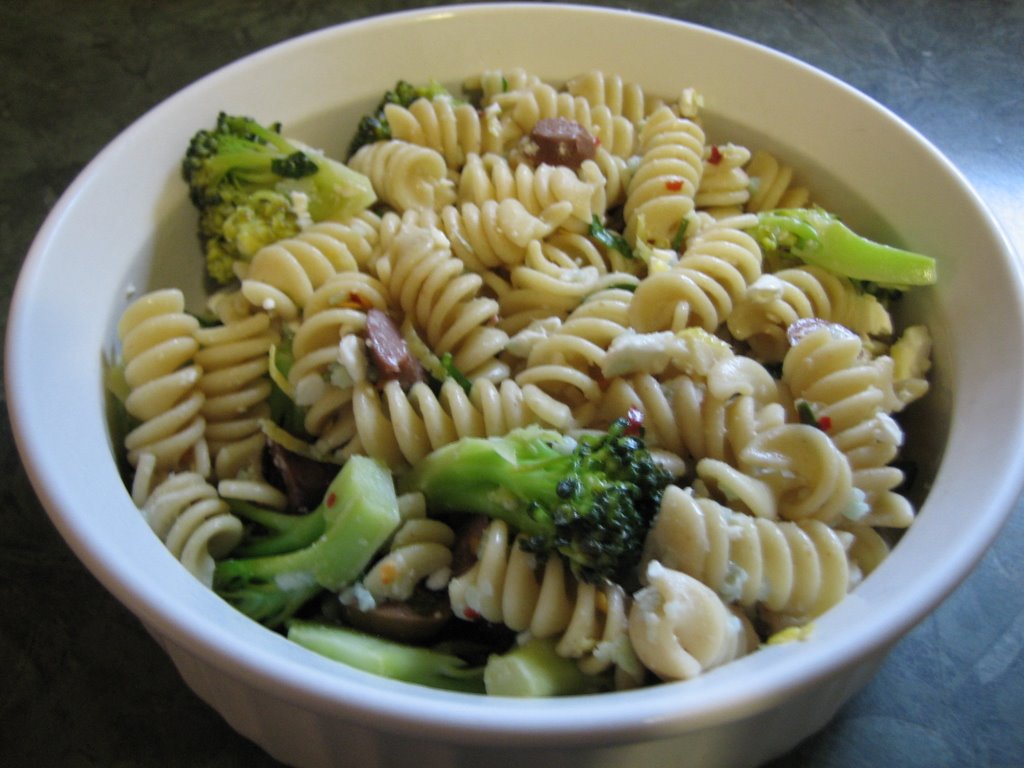
Rockin' Broccoli Rotini

Here's a great winter pasta recipe that's full of vitamin C and garlicky goodness!


1 pound whole wheat rotini pasta
2 teaspoons sea salt
2 tablespoons extra-virgin olive oil
7 medium garlic cloves, minced
juice and zest of one lemon
½ teaspoon ground black pepper
4 cups broccoli florets
½ cup pitted and quartered kalamata olives
½ chopped fresh flat leaf parsley
4 oz. low-fat feta cheese (optional)

1. Bring a large stockpot of water to boil. Add pasta, 1 teaspoon salt. Stir to separate and cook until al dente according to package directions.

2. While pasta is cooking, combine 1 tablespoon oil, garlic, lemon zest,1 teaspoon salt and pepper in a small nonstick skillet. Cook overmedium-high heat for 2 minutes.

3. In the final minutes of cooking the pasta, toss in broccoli, return to boil and drain. Return to stockpot.

4. Add garlic mixture to pasta. Toss to coat. Stir in olives, parsley, lemon juice and zest, and feta; salt to taste.

5. Serve immediately.

Friday, January 05, 2007

Guest Editorial: An American Idol Offers a Solution to the Nation’s Obesity Epidemic

One of our first Veggie Heros, Dr. Amy Joy Lanou, is always busy promoting a healthy vegetarian diet in the national media. With the advent of 2007, Dr. Lanou was back at it again with this super editorial. She was gracious enough to share it with us.


*****

First he took top honors on American Idol. Then Ruben Studdard accomplished something truly spectacular—something many Americans feel they can only dream of doing. The silky voiced R&B singer recently announced that he had shed nearly 100 pounds. Now, Studdard is participating in a public education campaign to help people in Alabama—his home state—lose weight in the new year.

Some may wonder whether even a very talented singer has anything to add to the public discussion about the obesity epidemic. After all, lawmakers and public health officials already seem to be scrambling to address what is increasingly viewed as America’s most pressing public health problem.

But as a nutritionist, I believe that Studdard’s story actually has an important lesson for the millions of frustrated Americans struggling to maintain a healthy weight. That’s because one key step in Studdard’s weight-loss plan was adopting a vegetarian diet. When he is on tour, his contract allows only vegetarian food backstage.

Scientists and physicians have known for quite some time that vegetarians tend to weigh less and stay healthier longer than their meat-eating peers. In fact, about a dozen studies published in the last two years support this finding. Research confirms what Studdard learned firsthand: Vegetarian and vegan eating styles are an effective and enjoyable way to lose weight.

Take, for instance, two large reviews published in 2006 that show vegetarians weigh 3 percent to 20 percent less than meat-eaters and have healthier body proportions than meat-eaters. Nearly 20 percent of the U.S. adult population is obese; contrast that with Berkow and her colleague’s finding published in Nutrition Reviews that only 0 to 6 percent of vegetarians are considered obese. A second review from the United Kingdom supports those findings.

It’s going meat-free that makes the difference. According to research published in the journal Obesity by Burke and colleagues, when individuals adhere to a low-calorie, low-fat vegetarian diet, they lose more weight and achieve greater decreases in blood cholesterol and blood glucose levels than if they follow a low-calorie and low-fat diet that includes meat. And in a study of nearly 22,000 people, Oxford University professor Timothy Key and his colleagues found that men who switch to a meat-free diet are less subject to the yearly weight gain that causes ever-expanding waistlines and clogged arteries in middle-aged omnivores.

More to the point, though, is Barnard and colleagues’ finding published in the American Journal of Medicine that low-fat vegan (dairy- and egg-free vegetarian) diets lead to weight loss of about a pound a week without exercise and without limiting calories. That’s the key—by changing our meals to ones built entirely from fruits, vegetables, beans, and whole grains, we can continue to eat until we are satisfied and still lose some unwanted pounds.

Even when compared with healthy omnivores of the same weight, vegetarians have lower risk of chronic disease because they consistently consume higher amounts of protective foods—fruit, vegetables, fiber-rich grains, and beans—according to findings published this year in the European Journal of Nutrition.

Despite the research—and Studdard’s success— many people still don’t seem to be aware of how easy it is to experience this “magic” for themselves. It’s as simple as changing what one orders when eating out, spending more time in the produce and bulk aisles in the grocery store, and perhaps visiting a vegetarian recipe Web site or asking vegetarian friends for recipe ideas. Vegetarian items are everywhere—grocery stores are chock-full of them, restaurants usually have several on the menu, and even many fast-food restaurants offer a vegetarian sandwich or burger.

Of course, there is no magical way to solve the obesity problem in the United States, but for every individual who chooses to take these easy steps to going meat-free, the nation will reap the benefits of reduced incidences of obesity, hypertension, diabetes, and cardiovascular disease.
Whether or not weight loss is a personal goal for the new year, if we want to reduce our ecological footprints, live more compassionately, and improve our chances of staying healthy as we get older, we can choose to adopt a vegetarian diet in 2007.

It’s as simple as apples, beans, and collard greens.